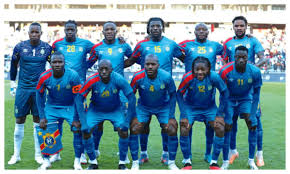
The Democratic Republic of Congo Football Federation has issued a stern warning to Nigeria’s Super Eagles, accusing the West African nation of attempting to overturn their recent FIFA World Cup play-off defeat through administrative channels rather than on-field performance.
The dispute centres on Nigeria Football Federation’s petition to FIFA questioning the eligibility of several DR Congo players who participated in the crucial encounter that ended 4-3 on penalties in Morocco. The defeat dashed Nigeria’s hopes of advancing to the FIFA Intercontinental Play-off, condemning the three-time African champions to missing consecutive World Cup tournaments for the first time since 2006.
Nigeria’s protest focuses on between six and nine DR Congo players who switched national allegiance but allegedly failed to comply fully with Congolese domestic law before representing the Central African nation. According to the Nigeria Football Federation’s General Secretary, Dr Mohammed Sanusi, the crux of the matter lies in DR Congo’s constitutional prohibition of dual citizenship.
“The Congolese rules say you cannot have dual citizenship or nationality,” Sanusi explained in an interview with PUNCH Online. “Wan-Bissaka has a European passport; some of them have French passports, others Dutch passports. The rules are very clear, and we have submitted our petition.”
Manchester United defender Aaron Wan-Bissaka, who switched from England to represent DR Congo, is among the players whose eligibility has been challenged. Other players reportedly hold French and Dutch passports whilst representing the Leopards.
Sanusi further clarified the federation’s position, stating: “FIFA rules say once you have a passport of your country, you’re eligible, and that is why they were cleared. But our concern is that FIFA was deceived into clearing them. It is not FIFA’s responsibility to enforce Congo’s domestic regulations; FIFA acts based on what is submitted to it. What we are saying is that the process was fraudulent.”
The Congolese football federation has dismissed Nigeria’s allegations with considerable force, accusing the Super Eagles of seeking an unmerited qualification route. In a statement shared on the national team’s official X account on Wednesday, the federation wrote: “If you can’t win on the pitch, don’t try to win from the back door. The World Cup must be played with dignity and confidence not with legal tricks. Bring it on.”
To counter Nigeria’s claims, DR Congo published documentation from FIFA’s Change of Association platform, displaying official records of players who switched nationality to Congo, complete with dates when the transitions were finalised. The federation also shared photographs of several naturalised players, including Wan-Bissaka, meeting with President Felix Tshisekedi, suggesting full governmental endorsement of their national team status.
According to FIFA’s regulations, players are deemed eligible to represent a nation once they possess a valid passport from that country. The world football governing body reportedly cleared all contested DR Congo players on this basis before the play-off match.
The controversy highlights a complex intersection between international sporting regulations and domestic constitutional law. Whilst FIFA’s eligibility criteria focus primarily on passport possession and formal application procedures, DR Congo’s constitution does not recognise dual nationality, requiring citizens to renounce previous citizenships upon acquiring Congolese nationality.
This discrepancy creates a grey area where players may satisfy FIFA’s requirements whilst potentially contravening their adopted nation’s domestic laws. Nigeria’s petition essentially argues that FIFA was misled into clearing players who had not fulfilled all legal requirements under Congolese law, despite possessing valid Congolese passports.
A member of the Nigeria Football Federation’s executive board, speaking anonymously to PUNCH Online, confirmed: “NFF has done the needful. Their constitution does not allow dual citizenship, and about six to nine players had that status during the play-off. That is the loophole we are exploring. Our lawyers must have submitted the relevant documents to FIFA as well.”
The outcome of this dispute carries significant implications for both nations. Nigeria, desperate to avoid missing a third consecutive World Cup after failing to qualify for Qatar 2022 and now facing elimination from the 2026 tournament, views the petition as a legitimate avenue to challenge procedural irregularities.
For DR Congo, who have qualified for the World Cup finals only once—in 1974 as Zaire—the controversy threatens to overshadow what would be a historic return to football’s grandest stage. The Leopards have already been handed a bye into the Intercontinental Play-off final, where they are scheduled to face either New Caledonia or Jamaica for a place at the 2026 World Cup in the United States, Canada and Mexico.
The 2026 tournament will be the first expanded World Cup featuring 48 teams, offering more African nations opportunities to compete. However, Nigeria’s potential absence would represent a significant blow to African football, given the Super Eagles’ pedigree as three-time African champions and regular World Cup participants.
Nigeria has participated in six FIFA World Cup finals—1994, 1998, 2002, 2010, 2014 and 2018—establishing itself as one of Africa’s most consistent performers on the global stage. The prospect of missing consecutive tournaments would mark an unprecedented downturn in the nation’s footballing fortunes.
DR Congo’s sole World Cup appearance came during a tumultuous period in the nation’s history. Competing as Zaire at the 1974 tournament in West Germany, the team lost all three group matches without scoring a goal, conceding 14 times. Their return after more than five decades would represent a remarkable achievement for Central African football.
As of this report, FIFA has not issued an official statement regarding Nigeria’s petition. The world governing body typically conducts thorough investigations into eligibility disputes, examining documentation and applicable regulations before reaching determinations that can include match replays, points deductions or disqualifications.
The complexity of this case, involving the intersection of international sporting law and national constitutional provisions, suggests FIFA’s deliberations may require considerable time and legal analysis.
Leave a Reply
You must be logged in to post a comment.