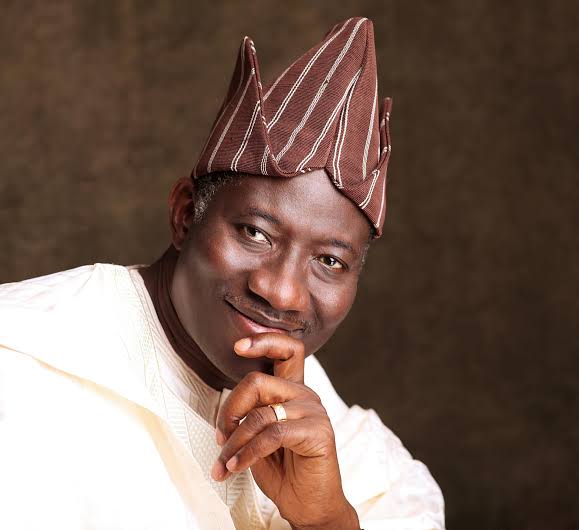
As the 2027 presidential election looms, a complex web of political maneuvering is unfolding behind closed doors, with influential northern politicians strategically considering former President Goodluck Jonathan as a potential “counterforce” to challenge President Bola Tinubu’s re-election bid. An in-depth analysis by Abuja Bureau Chief Leon Usigbe, obtained by this publication, reveals the intricate calculations and strategic realignments taking place within Nigeria’s political landscape.
The Southern Turn and Tinubu’s Consolidation:
The prevailing sentiment among political observers is that 2027 remains within the South’s turn to hold the presidency, following the North’s tenure. This poses a significant hurdle for any northern aspirant seeking to challenge Tinubu, as it risks violating the unwritten North-South power-sharing agreement. President Tinubu, acutely aware of this, has been actively consolidating his influence across the southern region, evident in recent political defections to the All Progressives Congress (APC).
Northern Discontent and the Coalition Gambit:
Despite the South’s perceived advantage, discontent is brewing in northern political circles over perceived marginalization, policy missteps, and escalating insecurity. Key figures, including former Vice President Atiku Abubakar, former Kaduna Governor Nasir el-Rufai, and others, are reportedly engaged in behind-the-scenes efforts to forge a new political coalition aimed at unseating Tinubu. However, the challenge lies in identifying a candidate who can unify the South without jeopardizing the North’s long-term political ambitions.
The Goodluck Jonathan Proposition: A Strategic Play:
The idea of Goodluck Jonathan returning as a consensus candidate in 2027 has emerged as a strategic option for northern political operators. Despite being a southerner, Jonathan enjoys widespread respect in the North due to his perceived humility, commitment to peace, and willingness to relinquish power in 2015. Moreover, his constitutional limitation to a single term presents a unique advantage for northern politicians eyeing the presidency in 2031.
Backing Jonathan offers a win-win scenario: it allows the North to challenge Tinubu while ensuring a relatively swift return to power, and it resonates with southern voters who believe Jonathan was unjustly removed from office. His image as a statesman and peace advocate further strengthens his appeal.
Why Not Peter Obi? Complications for the North:
While Peter Obi’s candidacy has gained traction among some opposition figures, his potential election poses complications for northern ambitions. Obi, a southern Christian, could serve two full terms, delaying the North’s return to power until 2035. Additionally, his support base, largely concentrated in the South-East and urban centers, raises concerns among northern elites regarding his national appeal and ideological flexibility.
Strategic Realignment, Not Sentiment:
The move to back Jonathan is driven by strategic calculations rather than sentiment. It represents a tactical realignment aimed at weakening Tinubu’s dominance and reasserting northern influence in the long term. The increasing hardship under Tinubu’s administration, coupled with Jonathan’s image as a consensus builder, further bolsters his appeal.
Challenges Ahead:
However, the plan faces significant challenges. Jonathan’s willingness to run remains uncertain, and the choice of a political platform necessitates compromise among opposition parties. Moreover, Tinubu’s formidable political machinery and incumbency advantages pose a formidable obstacle.
The Jonathan Option: A Powerful Compromise:
In the high-stakes political landscape of 2027, the North may find its best chance in backing Goodluck Jonathan. This strategic move allows them to challenge Tinubu while paving the way for a swift return to power by 2031. Ultimately, the 2027 election may hinge on strategy, alliances, and timing, with the Jonathan option emerging as a powerful compromise.
Culled from Tribune