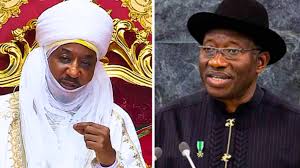
The Emir of Kano, Muhammadu Sanusi, has revealed that former President Goodluck Jonathan almost removed Nigeria’s fuel subsidy in 2011 but backed down due to the growing threat of Boko Haram insurgency at the time.
Speaking on Tuesday at the Oxford Global Think Tank Leadership Conference in Abuja, the former Governor of the Central Bank of Nigeria (CBN) explained that the decision to suspend full subsidy removal was influenced by national security concerns.
According to Sanusi, “The only reason the government compromised at that time and did 50 per cent to 100 per cent was Boko Haram. There were thousands of Nigerians on the streets in Lagos, Kano, Kaduna, and other cities.”
He said the administration feared that violent extremists could exploit the nationwide protests that followed the subsidy debate.
“There was a fear that one day, one of these suicide bombers would go to these Nigerians and explode bombs, and you would have 200 corpses; it would no longer be about subsidy,” Sanusi explained.
The monarch commended former President Jonathan for his courage and restraint, stating that “you have to give President Jonathan the credit. He was determined to do it, but at the end of the day, the compromise was made to save Nigerian lives.”
Sanusi further argued that the economic hardship currently facing Nigerians could have been avoided if the subsidy had been removed over a decade ago.
“If Nigerians had allowed the Jonathan government to remove the subsidy in 2011, there would have been pain,” he said. “But that pain would have been a very tiny fraction of what we are facing today. This is the cause of the delay.”
The Emir emphasised that Nigeria’s current economic crisis is a direct consequence of postponing difficult policy decisions, adding that true reform often demands short-term sacrifice for long-term stability.
Leave a Reply
You must be logged in to post a comment.