


The Federal Government has announced plans to overhaul Nigeria’s basic education structure by phasing out the policy that separates Junior Secondary Schools (JSS) from Senior Secondary Schools (SSS).
The policy shift addresses a critical bottleneck: more than 20 million children who enroll in primary school drop out before completing their secondary education.
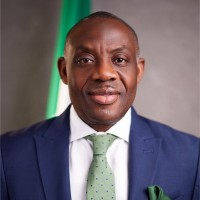
The Minister of Education, Dr. Maruf Tunji Alausa, disclosed this in Abuja during the inauguration of the Universal Basic Education Commission (UBEC) Ministerial Implementation and Monitoring Committee.
Nigeria currently operates the 6-3-3-4 education system, which comprises six years of primary education, three years of junior secondary, three years of senior secondary, and a minimum of four years of tertiary education.
Under this framework, basic education (primary and JSS) is administratively separated from post-basic (SSS) education.
However, Dr. Alausa stated that this division has failed and is directly contributing to the rising number of out-of-school children. He revealed that while Nigeria has approximately 80,000 public primary schools, there are only about 15,000 junior secondary schools. This deficit leaves millions of children with no transit path after primary school.
“About 24 million children enroll in our primary schools, but only about four million complete senior secondary education,” Alausa said. “We have over 20 million children dropping out between primary and junior secondary school.
“We have overflowing junior secondary schools and empty senior secondary schools. This disarticulation policy has failed, and we will phase it out. We cannot continue creating administrative positions at the expense of our education system.”
The minister added that the proposal to formally abolish the policy would be presented at the next meeting of the National Council on Education for consideration.
New Committee to Revive Abandoned Schools
To address immediate infrastructural deficits, Alausa inaugurated a high-powered committee chaired by education expert Prof. Rashid Aderinoye. The committee is tasked with fast-tracking the completion, handover, and operation of hundreds of UBEC-funded Smart Schools, Bilingual Schools, and Alternative Schools across the country.
The minister lamented that despite significant public investment, many of these facilities remain locked, completed but unused, or abandoned.
“The purpose of these schools is to educate children, not to remain locked up after completion,” Alausa said, urging the committee to resolve the administrative bottlenecks delaying their deployment.
Earlier, the Executive Secretary of UBEC, Aisha Garba, highlighted the commission’s progress in expanding access to quality education. She noted that 37 Smart Schools have been established nationwide, with 24 already operational.
Additionally, under the UBEC-Islamic Development Bank Bilingual Education Programme, 30 schools have been built across nine states, with several boarding facilities already commissioned or nearing completion.
Garba stated that the newly inaugurated committee will ensure that these investments translate into functional learning centers, particularly for vulnerable and out-of-school children.
Responding on behalf of the committee, Prof. Aderinoye pledged to discharge their duties with transparency and urgency to help bridge the country’s educational gaps.


