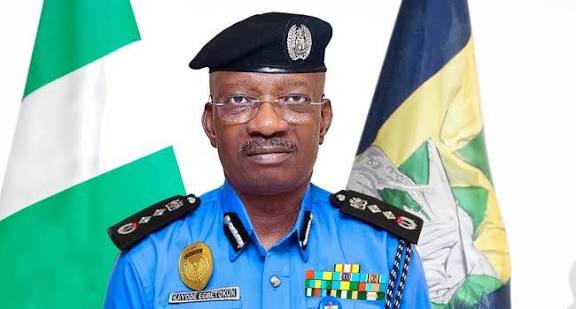
Contrary to the official explanation that former Inspector-General of Police Kayode Egbetokun resigned for “family reasons,” sources inside the presidency say President Bola Tinubu asked Mr Egbetokun to step down on February 24 over three key disputes between the IGP and the presidency.
Mr Egbetokun left office on the president’s request the same day the presidency announced the appointment of Assistant Inspector General Olatunji Disu as acting inspector-general.
Presidential sources told PREMIUM TIMES that the decision was driven primarily by Mr Egbetokun’s rejection of the federal government’s push for state policing. The sources said Mr Egbetokun was “not in support of the creation of state policing” and that his position directly conflicted with Mr Tinubu’s long-stated commitment to devolve police powers to states.
At a National Dialogue on State Policing in April 2024, President Tinubu — represented by Vice President Kashim Shettima — described state policing as a major reform to make law enforcement more responsive to local needs. Mr Egbetokun, however, told the forum that “Nigeria is yet to mature and ready for the establishment of state-controlled police,” warning of potential abuse by state political leaders and the risk that governors might use such forces “for political or personal gain.”
Sources said that disagreement over the “signatory policy of state police” — a point of contention in planning and implementation — further deepened the rift.
A second reason cited by presidency insiders was Mr Egbetokun’s handling of a November 2025 presidential directive ordering the withdrawal of police protection for VIPs and encouraging the use of the Nigeria Security and Civil Defence Corps (NSCDC) for such duties. The sources told this newspaper that the president was dissatisfied with what he regarded as inadequate compliance: “The rate at which he has succeeded in withdrawing police officers from VIP is very low,” one source said.
The third factor was reputational: Mr Egbetokun’s inclusion on a blacklist compiled by the International Press Institute (IPI) Nigeria. The IPI added the former IGP’s name to its “Book of Infamy” amid concerns about a spate of attacks and harassment of journalists by police under his watch. Sources said the presidency felt embarrassed by the international censure and had earlier urged Mr Egbetokun to curb abuses and ensure accountability for perpetrators.
IPI’s action followed allegations that around 24 journalists were harassed — including arbitrary arrests, summonses and detentions — with little visible corrective action from the police leadership. The IPI also raised concerns about the continued use of the Cybercrimes Act against journalists and dissenting voices.
The presidency had officially framed Mr Egbetokun’s departure as voluntary and prompted by family considerations. But multiple insiders familiar with the matter told this newspaper the resignation was at the president’s request and rooted in policy and performance disagreements.
Background and tenure
Mr Egbetokun was appointed the 22nd Inspector-General of Police on June 19, 2023, and his substantive appointment was confirmed by the Nigeria Police Council on October 31, 2023. Originally expected to retire on reaching the statutory retirement age, an amendment to the Police Act later created a fixed four-year tenure for IGPs — effectively extending his term to October 31, 2027 — a move that drew public criticism over its timing and legality.
Mr Egbetokun left office at 61, several months after marking 35 years of service in 2025.
After Mr Egbetokun’s exit, President Tinubu formally decorated Mr Disu as acting inspector-general on Wednesday.
This newspaper contacted the presidency and the police for comment. Requests were not responded to at the time of publication.
Leave a Reply
You must be logged in to post a comment.