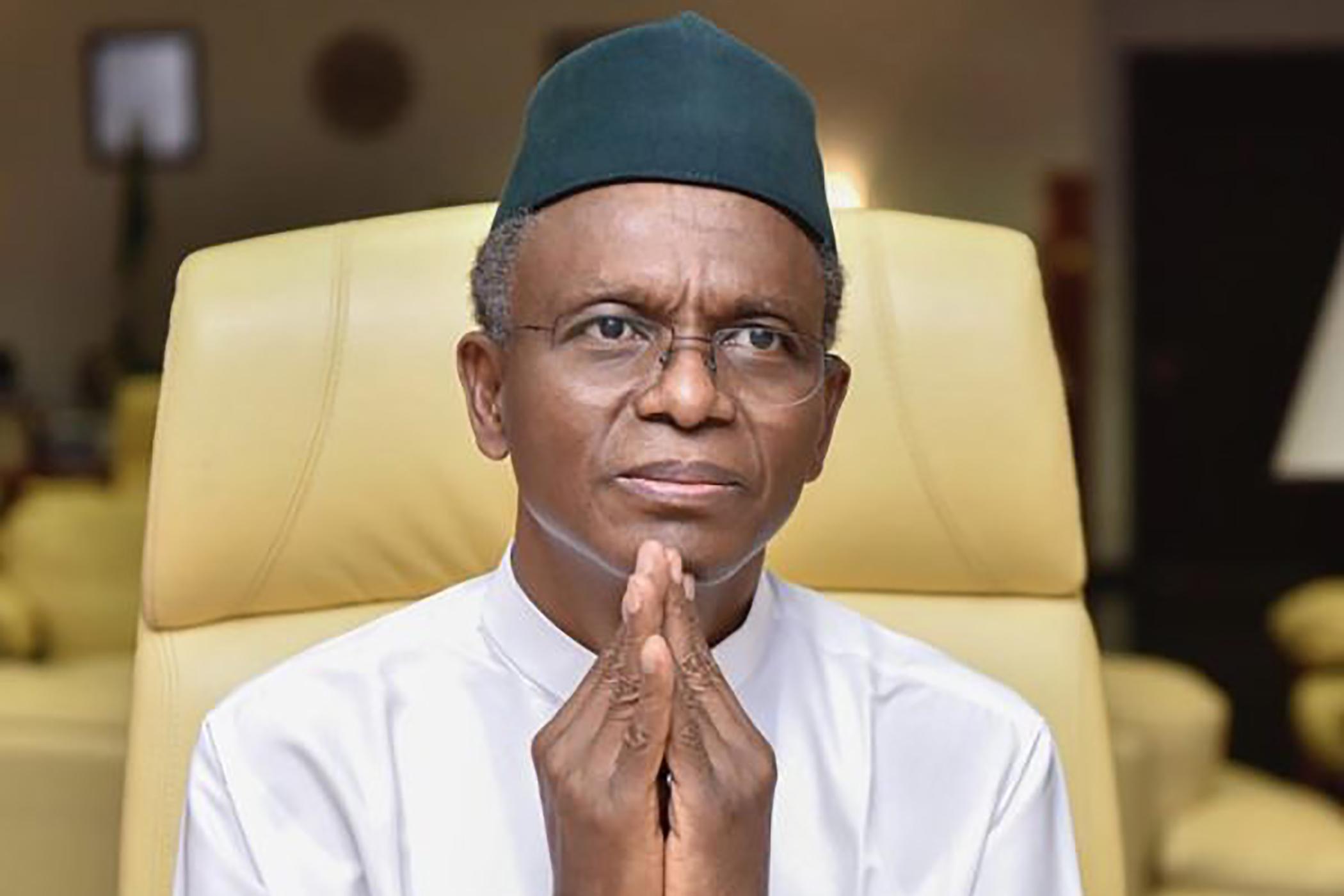
•Confession Could Reveal Who is Bugging Top Security Lines for Terrorists-NEYGA Warns
•”Yes, we have our ways. We listen to government conversations and tapped Ribadu’s phone calls,” El-Rufai admitted.
•Security experts warn of grave national‑security implications;
Former Kaduna State Governor Nasir El-Rufai is under intense scrutiny after telling a national television audience that the phone of National Security Adviser (NSA) Nuhu Ribadu had been intercepted and that he heard a leaked conversation ordering his arrest.
Appearing on Arise TV on Friday, El-Rufai said he learned of an alleged plan to detain him upon his return to Nigeria through the leaked call. “Ribadu made the call because we listened to their calls. The government thinks that they’re the only ones that listen to calls. But we also have our ways,” he told interviewer Charles Aniagolu.
“That technically is illegal. I know, but the government does it all the time. They listen to our calls all the time without a court order. But someone tapped his phone and told us that he gave the order,” El-Rufai added.
READ ALSO: El-Rufai Wants Answers From Ribadu About ‘Odourless Poison’ From Poland
Within hours, the disclosure drew sharp reactions from the Presidency, security and legal experts, former intelligence chiefs, and opposition figures, many demanding a formal investigation and a forensic audit of Nigeria’s intelligence systems.
Presidential aides took to social media to call for immediate action. Bayo Onanuga, Special Adviser to the President on Information and Strategy, posted: “El-Rufai confesses to wire-tapping Nigeria’s NSA on TV. Does it mean that he and his collaborators have wire-tapping facilities? This should be thoroughly investigated and punishment meted out.” Senior Special Assistant on Media and Publicity Temitope Ajayi warned that any detention of El-Rufai would not end the controversy, suggesting the former governor would portray it as political persecution.
Security experts described the claim as “extremely grave.” Retired DSS Director Abdulrasaq Salami said intercepting the NSA’s communications—if proven—would represent a major breach of national security protocols. He stated it should trigger criminal and administrative inquiries, the immediate suspension of compromised credentials, forensic sweeps, and an integrity review involving the NSA, SSS, NIA, and the Attorney General.
READ ALSO: ADC Slams Tinubu for Attending Festival Amid Rising Insecurity in Kwara
“A confirmed admission that the NSA’s phone was tapped would be a grave breach of national security protocol and could trigger criminal probes and forensics across Nigeria’s intelligence architecture,” Salami said, warning that operational plans, sources, and methods could have been exposed.
A retired senior military intelligence officer, speaking on condition of anonymity, cautioned that the fallout could damage international intelligence cooperation. “Partners may pause intelligence sharing until they are satisfied that sensitive channels are secure,” he said, adding that human sources could withdraw for fear of exposure.
**Technical Capability and Legal Framework**
Security analyst Kabiru Adamu confirmed that the technological ability to intercept high-level communications exists but noted it is highly sophisticated and typically restricted to state actors or powerful private vendors. He noted that vendors linked to countries such as Israel, the UAE, and the U.S. have operated globally and have been active in Nigeria.
“If the claim is confirmed, El-Rufai could face a probe,” Adamu said, but he warned that any summons might be seen as politically motivated amid rising tensions ahead of the 2027 general election.
READ ALSO: Horror in Rivers: Man Cries Out as Wife’s Corpse Vanishes from Mortuary Weeks to Burial
Constitutional lawyer AbdulAzeez Rahman stressed that unlawful phone tapping contravenes constitutional and statutory protections. He cited Section 37 of the 1999 Constitution, which guarantees the privacy of telephone conversations; Section 146(1) of the Nigerian Communications Act (2003), which makes interception unlawful without authority; the Lawful Interception of Communications Regulations (2019); and the Cybercrime Act (2015). Rahman warned that unlawful interception could attract fines and imprisonment, and render any obtained evidence inadmissible.
**Ganduje Responds to Resurfaced Abduction Claim**
The controversy widened after El-Rufai linked former Kano Governor Abdullahi Ganduje to the 2019 disappearance of Kaduna activist Abubakar Idris (Dadiyata). Ganduje’s camp, through former Kano Commissioner Muhammad Garba, described the allegation as “reckless, unfounded, and a clear attempt to shift responsibility” for an abduction that took place in Kaduna while El-Rufai was governor.
Garba stated that Dadiyata lived and campaigned in Kaduna and that there is no credible record that the activist’s primary focus was the Kano government. “Everyone in Kaduna knew the nature of the criticism he made and who it was directed at,” Garba said, urging that such serious allegations be backed by verifiable evidence.
NEYGA Demands Urgent Investigation
The Northern Ethnic Youths Group Assembly (NEYGA) has joined the call for an official investigation into El-Rufai’s comments. In a statement signed by Mallam Ibrahim Dan-Suleiman, the group urged authorities to “unearth the possibility of how terrorist groups and criminal elements are aware of government plans targeting their operations.”
The group argued that El-Rufai’s remarks could help identify who is tapping into top security communications. “The former governor’s confession may be an eye-opener to how and who are bugging top security lines for bandits and other terrorist organizations,” the statement said.
NEYGA warned that treating the matter purely as a political issue would be a costly mistake. “This is not about APC or ADC but about the Nigerian federation, those held captive by bandits, and the security of all,” the group added, noting that terrorists often appear to be one step ahead of government operations.
The call for a probe follows El-Rufai’s specific allegation that the NSA personally ordered his arrest and that the ICPC used the State Security Service (SSS) to attempt to “abduct” him upon his arrival in the country.
At the time of publication, attempts to reach representatives for El-Rufai, the ICPC, the SSS, or the NSA for comment were unsuccessful. Authorities have not yet announced a formal investigation into the allegations.
Leave a Reply
You must be logged in to post a comment.