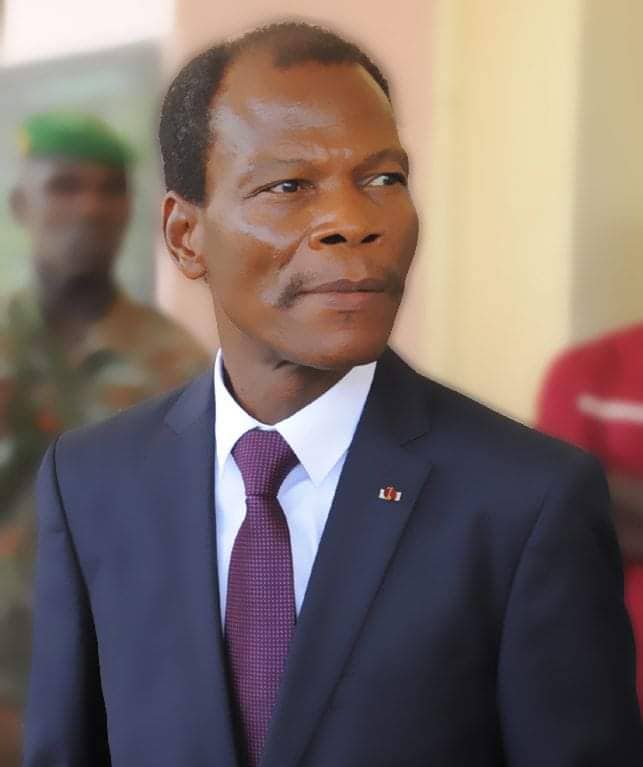
The pre-trial detention of former defence minister Candide Azannai in Benin presents a stark and troubling paradox. As the government moves decisively to prosecute those behind a failed December coup, its most controversial action is the arrest of a prominent opposition politician who had publicly condemned the putsch. This move, defended by authorities as a necessary legal step, risks undermining the very democratic principles the state claims to be defending. The situation exposes a central dilemma for governments confronting instability: how to protect constitutional order without resorting to the very tactics that erode it.
Candide Azannai was detained on Saturday following hours of questioning at Benin’s court for the suppression of economic crimes and terrorism. An AFP journalist reported that police escorted him away at dawn to be placed in custody, accused of “plotting against the state” and “incitement to rebellion.” This development is the latest in a wave of arrests that began after soldiers, led by Lieutenant-Colonel Pascal Tigri, announced they had toppled President Patrice Talon on national television on December 7. While loyalist forces, aided by the Nigerian air force, swiftly crushed the military rebellion, the political aftermath has seen a widening net. Roughly 30 people, mostly soldiers, were jailed for treason on December 16. Azannai’s arrest, however, marks a significant escalation, shifting the focus from uniformed mutineers to the political opposition.
The paradox of Azannai’s detention lies in its context. By all public accounts, he was not a supporter of the coup. In a statement released on his Facebook page shortly after the attempt, he explicitly denounced the actions of the soldiers.
“I condemn with the utmost firmness this attempt to take power by force,” he wrote. He went further, warning the government against exploiting the crisis, stating the event “should not be used as a pretext to muzzle or intimidate those who think differently.” His subsequent arrest, based on charges of plotting against the very state he urged the plotters not to overthrow, appears to many observers as a direct contradiction. It creates a perception that the legal framework for “state security” is being wielded not just against violent plotters, but against established political dissent.
Read Akso: Benin Detains ex-Defence Minister Over Foiled Coup
This tension did not emerge in a vacuum. Benin, once lauded as a model of democratic stability in West Africa, has experienced significant democratic backsliding under President Patrice Talon. In recent years, major opposition parties have been barred from parliamentary and presidential elections. The political space has narrowed considerably, with critics accusing the administration of authoritarian tendencies. This backdrop is crucial for understanding the Azannai case. When a state with a record of constricting political opposition then detains a leading critic under the banner of defending democracy, it invites deep scepticism. The action feeds a narrative that the anti-coup crackdown is being used to settle political scores and further consolidate power ahead of Talon’s constitutionally mandated exit in April 2026.
The government’s dilemma is real. Following a violent attempt to overthrow the state, it has a legitimate duty to investigate all possible connections and ensure stability. The line between a thorough investigation and a political purge, however, is perilously thin. By targeting a figure like Azannai, the Talon administration may believe it is neutralising a potential threat. Yet, the immediate effect is to polarise the political environment further and validate long-standing grievances about the lack of fair political contestation. It employs a classic autocratic tactic—using broad national security laws to detain political opponents—in the name of preserving a democratic republic.
In the end, the detention of Candide Azannai is more than a legal proceeding; it is a political signal. While the swift military response by Benin and its ECOWAS allies successfully defended a constitutional government from armed revolt, the post-coup political response now tests the resilience of Benin’s democracy in a different way. A state can survive a coup by soldiers only to be weakened by a creeping erosion of its own political pluralism.
The ultimate success in defeating the coup will be measured not just by the trials of soldiers in a courtroom, but by whether the political opposition, including those like Azannai, can stand freely in an election. The paradox is that in its zeal to secure the state, the government may be making that outcome less likely.
Leave a Reply
You must be logged in to post a comment.