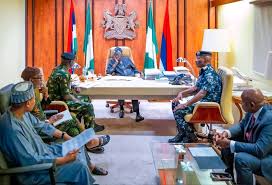
Senator Francis Fadahunsi, the APC voice for Osun East, has pressed President Bola Tinubu to extend the ongoing shake-up in Nigeria’s defence hierarchy by installing a retired military officer as National Security Adviser and shifting the incumbent, Mallam Nuhu Ribadu, to a role that matches his policing background. The call, issued through a formal statement from his media office in Osogbo, builds on the lawmaker’s earlier demand for a root-and-branch review of the country’s security command structure.
Fadahunsi, a customs veteran turned politician who clinched the Osun East seat in 2019 and retained it in 2023, framed the recommendation as a practical fix for coordination gaps that he says hamper the fight against banditry and insurgency. In the statement, signed by Special Adviser on Media Sam Segun-Progress and released on Tuesday, the senator urged the President to “replace the current National Security Adviser, Mallam Nuhu Ribadu, with a retired military officer for a more efficient coordination of the fight against bandits and other violent criminals.” He added that Ribadu “should be moved to his area of core competence, where his skill can be better put to use.”
The senator’s push lands amid a flurry of changes at the top of Nigeria’s defence apparatus. On November 28, 2025, President Tinubu accepted the resignation of Defence Minister Mohammed Badaru Abubakar, a former Jigawa State governor, and forwarded the name of retired General Christopher Gwabin Musa to the Senate for confirmation as his replacement. Musa, who stepped down as Chief of Defence Staff in October 2025 after a two-year stint, brings a decorated career that includes command of Operation Hadin Kai in the North-East and oversight of joint task forces against Boko Haram.
Fadahunsi welcomed the nomination during plenary contributions captured in a brief video clip circulated by Senate media handlers. “The Minister of Defence is not a soldier or a retired general. The Minister of State, all of them are businessmen. The NSA is a retired policeman,” he told the chamber. He highlighted a cultural friction within the ranks, noting, “Do you know that these soldiers call us—even those carrying superior guns than theirs—‘bloody civilians’? And that is what is affecting us.” Wrapping his argument, he stated, “The Commander-in-Chief needs to look at the military architecture around him and do the needful. If not, we will continue to waste money because they will not take orders from any other person other than their own general.”
The Office of the National Security Adviser, created by the National Security Agencies Act of 1986 and strengthened under the 1999 Constitution, sits at the nexus of intelligence and military strategy. Ribadu, appointed in June 2023 after serving as pioneer chairman of the Economic and Financial Crimes Commission from 2003 to 2007, is the first retired police officer to hold the post. His tenure has overseen the rollout of the National Counter-Terrorism Strategy 2024-2028 and coordination of the Multi-National Joint Task Force against Lake Chad insurgents. Yet, persistent attacks—1,296 fatalities from banditry in the North-West alone between January and September 2025, per the Armed Conflict Location & Event Data Project—have kept pressure on the security architecture.
This is not the first time civilian appointees have faced scrutiny for leading military-heavy portfolios. The Ministry of Defence, restructured in 1999 to merge the former Defence Headquarters with civilian oversight, has alternated between retired generals and political figures. Badaru’s predecessor, Bashir Magashi, was a retired major-general; before him, Mansur Dan-Ali held the role as a civilian. The Minister of State for Defence, Bello Matawalle, a former Zamfara governor, retains his position amid the reshuffle.
Fadahunsi’s advocacy draws from the Armed Forces Act Cap A20, which vests operational command in the service chiefs while policy direction flows from the President through the NSA and Defence Minister. Section 218 of the 1999 Constitution reinforces the President’s role as Commander-in-Chief, but day-to-day deference often tilts toward uniformed leadership—a dynamic the senator argues undermines civilian heads. The National Security Council, chaired by the President and including the Vice President, service chiefs, NSA, and select ministers, last convened publicly in August 2025 to approve a N750 billion supplementary budget for arms procurement.
Senate screening for General Musa is slated for the week of December 8, 2025, per the upper chamber’s calendar released after Tuesday’s plenary. Confirmation requires a simple majority under Order 95 of the Senate Standing Orders. Meanwhile, the House of Representatives Committee on Defence has scheduled oversight visits to North-West military formations in December, part of a broader probe into the N3.2 trillion defence allocation in the 2025 budget.
As the administration enters its third year, with state police bills and community policing frameworks still winding through committees, the debate over who best steers Nigeria’s security ship shows no sign of abating. The coming weeks will reveal whether Tinubu leans toward the senator’s blueprint or sticks with the current mix in a landscape where threats evolve faster than the structures meant to contain them.
Leave a Reply
You must be logged in to post a comment.