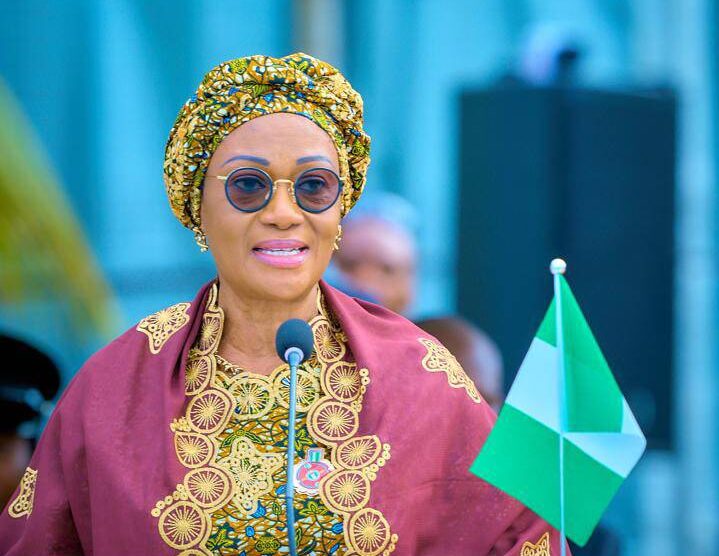
The First Lady of Nigeria, Senator Oluremi Tinubu, has highlighted a troubling disconnect between how Nigerian leaders are perceived internationally and the treatment they receive domestically. Speaking on her official Facebook page, Mrs. Tinubu expressed concern over the widespread criticism and hostility Nigerian leaders face at home, despite enjoying respect and honour abroad.
Her comments came shortly after United States President Donald Trump publicly praised her at the National Prayer Breakfast in Washington, DC, describing her as “a very respected woman.” The event, attended by U.S. lawmakers, religious leaders, and international delegates, spotlighted Mrs. Tinubu’s dual role as Nigeria’s First Lady and an ordained pastor with the Redeemed Christian Church of God.
“We’re honoured to be joined today by the First Lady of Nigeria, who also happens to serve as a Christian pastor at the largest church in Nigeria. A very respected woman,” Trump said during his address, acknowledging Mrs. Tinubu’s presence.
Reacting to the international recognition, the First Lady lamented the growing divide between foreign admiration for Nigerian leaders and the disrespect they endure from their own citizens. She attributed this to “hate and politically driven narratives” that have sowed division and mistrust among Nigerians.
“Most of our leaders are highly respected and honoured abroad, yet many Nigerians fail to value what they have because of hatred and the narratives planted in their minds by political paymasters,” she wrote. “This culture of public ridicule and online abuse—bullying, cursing, and mocking leaders—only weakens our national unity and progress.”
Mrs. Tinubu called on Nigerians to pivot from criticism toward support, emphasizing the nation’s need for unity, respect, and collective effort to achieve shared success. “Nigeria is built on love, unity, and collective effort toward shared success. Let us work together to build a stronger nation,” she urged.
Her remarks come as Nigeria faces renewed international scrutiny over security concerns, notably claims about violence targeting Christians. In late 2025, the U.S. designated Nigeria as a “country of particular concern” for religious freedom, a move rejected by Nigerian authorities, who argue that terrorism affects all citizens regardless of faith or ethnicity.
Leave a Reply
You must be logged in to post a comment.