Tag: #Economy

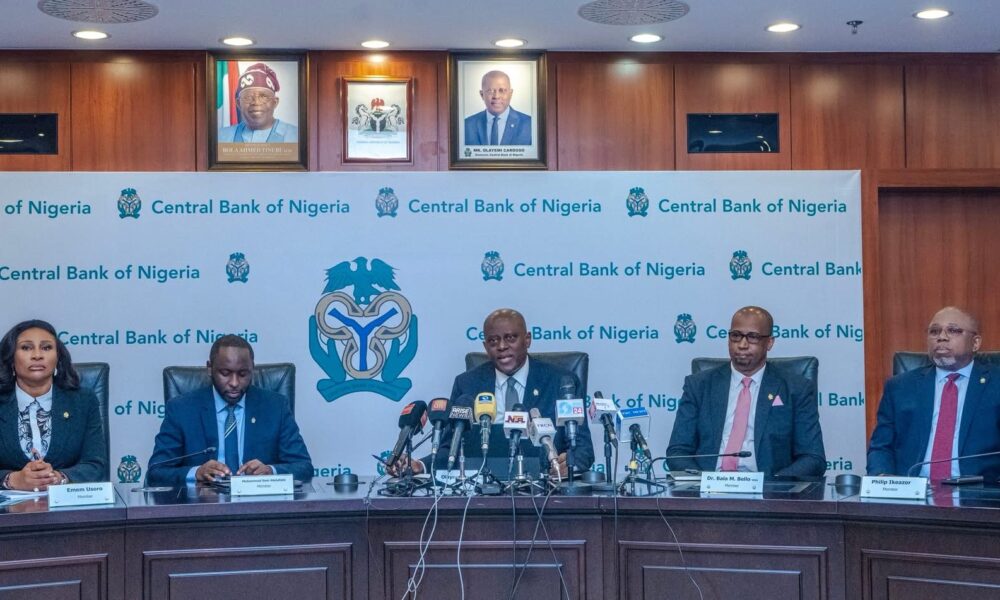
  • 300th MPC Meeting: Cardoso Declares Nigerian Financial System Sound, Stable With Positive Indicators.

    300th MPC Meeting: Cardoso Declares Nigerian Financial System Sound, Stable With Positive Indicators.

    By OBSERVERS TIMES

    CBN Governor, Olayemi Cardoso, has reiterated that the Nigerian financial system remains sound and stable, with positive performance indicators.

    The MPC has urged CBN to sustain its strong oversight role of Nigerian Banks to ensure compliance with regulatory and macro-prudential standards.

    According to Governor Cardoso:

    • Investors don’t go where there’s instability. With stability comes confidence. With confidence comes investment. And with investment comes growth and output. That’s the path Nigeria is now firmly on.
    • ⁠At the Central Bank of Nigeria, we are on a mission to restore confidence and rebuild trust. It won’t happen overnight, but we are committed to consistency and transparency, hallmarks of our work over the last 18 months.
    • ⁠The NRBVN initiative is a game-changer. Nigerians in the Diaspora now have seamless access to invest back home. We are targeting $1B monthly inflows, and we’ll get there.
    • ⁠CBN is walking the talk. Publishing our audited statements validates our stance on orthodox monetary policy.
    • ⁠The trust deficit is real. But so is our resolve. We’re making the system stronger, safer, and more accountable.
    • ⁠This is no longer a question of ‘Should we invest in Nigeria?’ It’s a question of ‘when do we invest in Nigeria?’. Global interest is real and growing.
    • ⁠Our currency is now more competitive, and with a safe and reliable payments system, trade across the region can flourish without the usual risks.

    The MPC has welcomed new policies from the Federal Government to boost local production and ease FX pressures. It has urged more support for non-oil exports to strengthen Nigeria’s economic fundamentals.

    The MPC reaffirmed its commitment to anchoring inflation expectations, easing exchange rate pressures, and maintaining price stability over the near-to-medium term.

    Given the global and domestic uncertainties, the CBN MPC has resolved to maintain close surveillance and ensure readiness to respond to emerging shocks.

    Rebuilding trust also means securing our systems. We’ve implemented robust KYC and partnered with NIBSS to ensure safety, screen users, and stay off the FATF grey list.
  • N364bn Pulled out of Banks by Customers in November-CBN

    N364bn Pulled out of Banks by Customers in November-CBN

    By Anastasia John E.

    Nigerians withdrew N364.38 billion from banks in November 2024 amid widespread cash scarcity, according to the latest data from the Central Bank of Nigeria (CBN) Money and Credit Statistics.

    The CBN reported that currency outside banks surged to N4.65 trillion in November, up from N4.29 trillion in October, reflecting an 8.5 percent month-on-month increase. Additionally, the total currency in circulation climbed to N4.88 trillion, marking an increase of N328.91 billion, or 7.2 percent, compared to the previous month.

    These figures underscore the persistent reliance on cash within the Nigerian economy, despite ongoing efforts to promote cashless transactions.

    The November figure for currency outside banks represents a significant 51 percent year-on-year growth compared to N3.08 trillion in November 2023. Throughout 2024, cash outside banks has shown consistent growth, starting at N3.28 trillion in January and peaking in November.

    In February, the figure rose to N3.41 trillion, a four percent increase from January, and further climbed to N3.63 trillion in March, reflecting a 6.3 percent increase. April saw a slight decline to N3.61 trillion, but it rebounded to N3.71 trillion in May, with a 2.9 percent increase. By June, currency outside banks rose to N3.79 trillion, a 2.2 percent increase, before slightly declining to N3.67 trillion in July, reflecting a 3.3 percent drop.

    However, August recorded a recovery to N3.87 trillion, up by 5.5 percent, while September and October continued the upward trend, reaching N4.02 trillion and N4.29 trillion, respectively. The November peak of N4.65 trillion marked the highest figure for 2024, attributed to increased cash demand during the festive season.

    Currency in circulation followed a similar trajectory, rising steadily from N3.65 trillion in January to N4.88 trillion in November. In February, the figure increased to N3.69 trillion, a 1.2 percent month-on-month rise, and further climbed to N3.87 trillion in March, reflecting a 4.8 percent increase. After a slight decline to N3.92 trillion in April, it rebounded to N3.97 trillion in May. By June, currency in circulation rose to N4.05 trillion, while July recorded a minor decline to N4.05 trillion. August and September saw further increases to N4.14 trillion and N4.31 trillion, respectively, with October rising sharply to N4.55 trillion before peaking at N4.88 trillion in November.

    Despite these increases, Nigeria faced significant cash shortages toward the end of 2024, with reports indicating widespread difficulties in accessing cash. Many banks resorted to rationing withdrawals, and ATMs were frequently out of service, compounding economic hardships for citizens, particularly during the festive season.

    In response to the shortage, the CBN implemented measures to improve cash availability. Effective December 1, 2024, the apex bank directed customers to report difficulties in accessing cash directly to their banks through state-specific contact numbers and email addresses. The CBN also instructed Deposit Money Banks to prioritize cash disbursements over the counter and via ATMs, warning that institutions failing to comply would face penalties.

    These measures aim to ensure sufficient cash supply and address operational inefficiencies within the banking system. The CBN has emphasized that all denominations of the naira, including both old and redesigned notes, remain legal tender, clarifying public confusion over the validity of older naira notes.

    Despite these interventions, reports indicate that cash shortages persist, with limited withdrawal limits still affecting many areas. In November, 95.4 percent of the total currency in circulation was held outside banks, the highest percentage recorded this year. This trend highlights the continued preference for cash transactions, averaging 93.7 percent throughout 2024.

    The reliance on cash underscores structural issues such as limited banking infrastructure, low trust in digital payment systems, and inadequate financial inclusion, particularly in rural areas. The dominance of cash poses significant challenges for Nigeria’s monetary policy, as a large volume of currency outside banks hampers the CBN’s ability to manage inflation and liquidity effectively.

  • Every Country Including UK, US Has Hungry Persons; Nigerian President Bola Tinubu Addresses Hunger Crisis in Live Interview

    Every Country Including UK, US Has Hungry Persons; Nigerian President Bola Tinubu Addresses Hunger Crisis in Live Interview

    During a recent media chat, President Bola Tinubu discussed the ongoing hunger crisis in Nigeria, pointing out that hunger is a global issue experienced even in developed countries like the UK and the US.

    President Tinubu made these comments in response to recent stampedes in the country that resulted in tragic loss of life. While some have attributed these incidents to economic hardships, President Tinubu insists that poor planning by event organizers was the main cause.

    He emphasized the need for organized and disciplined distribution of food aid, citing his own experience of giving out food and aid in an orderly manner for the past 25 years. President Tinubu acknowledged that hunger exists in every society, but it is essential to ensure that distribution of palliatives is done in a systematic and effective manner.

    The recent stampedes in Nigeria have sparked debates regarding the socioeconomic situation in the country, with some political parties and concerned citizens calling for better protocols and planning when distributing food aid. President Tinubu’s comments shed light on the importance of organized efforts to alleviate hunger, resonating with the ongoing discussions surrounding food distribution in Nigeria.

  • CBN Reform: Naira Stabilizes Amid Inflows from Eurobond, Diaspora Dollars

    CBN Reform: Naira Stabilizes Amid Inflows from Eurobond, Diaspora Dollars

    The Nigerian naira has achieved relative stability in the foreign exchange market, buoyed by several key factors. Inflows from the Nigerian diaspora returning home for the Christmas holiday, proceeds from a recent Eurobond issuance, and enhanced market transparency introduced by the Central Bank of Nigeria (CBN) have all contributed to this positive trend.

    These developments have led to improved liquidity and boosted confidence in the foreign exchange market. The naira is currently trading within a range of N1,660 to N1,525 per dollar in the official market and has remained steady at approximately N1,660 in the parallel market.

    On Thursday, the naira appreciated against the dollar, gaining N5 to close at N1,540/$, compared to N1,545/$ on Wednesday, according to data from the CBN. In the black market, the local currency held firm at N1,660 per dollar.

    Authorized currency dealers reported the highest rate for the dollar at N1,550 on Thursday, an improvement from N1,565 on Wednesday. Meanwhile, the market’s lowest rate remained stable at N1,531 per dollar at the Nigerian Foreign Exchange Market (NFEM).

    The naira’s stability is largely attributed to the CBN’s implementation of the Electronic Foreign Exchange Matching System (EFEMS), which has enhanced transparency and efficiency in foreign exchange trading. This system has played a critical role in fostering a more stable and reliable foreign exchange environment in Nigeria.

  • CBN Clarifies Monetary Credit, Foreign Trade and Exchange Policy Guidelines For Year 2024-2025

    CBN Clarifies Monetary Credit, Foreign Trade and Exchange Policy Guidelines For Year 2024-2025

    The Central Bank of Nigeria (CBN) has issued a statement addressing the misinterpretation and misrepresentation of its recent publication on Monetary, Credit, Foreign Trade, and Exchange Policy Guidelines, which was published on September 17, 2024. In light of these issues, the CBN has temporarily withdrawn the document to prevent further misunderstandings.

    As is stated explicitly in the document to guide stakeholders, the CBN reiterates that the publication is a compilation of previously issued policies and guidelines issued by the Bank up to a cut-off date, typically December 31 of the relevant year.

    As in all previous editions, the current document is intended to achieve the following objectives:

    1. A single reference source for the ease and convenience of stakeholders.
    2. A valid compilation of policies, directives, and guidelines for adjudication in conflict situations involving stakeholders.
    3. Additional clarification of policies and guidelines.

    As a compendium of previously issued policies and guidelines, the provisions are applicable only to the extent that there have been no updates or revisions to the guidelines and policies contained therein. This is stated explicitly in the document to guide stakeholders.

    In line with prior editions, the most recent publication (January 2024) contains policies and guidelines issued by the Bank up to 31st December 2023, some of which will remain relevant during the period 2024 – 2025. However, several others may cease to apply owing to revisions or updates that become applicable in the aftermath of its publication.

    This is clearly stated in the document as follows:

    “The Guidelines may be adjusted by the CBN without prior notice, to address new developments in the domestic and global economies in the period. However, such amendments shall be communicated to the relevant institutions/ stakeholders in supplementary circulars” (Page 8, Paragraph 1).

    The publication further provides the public with avenues for obtaining clarifications on the whole or any part of the document on pages 147 and 148.

    In the light of these clarifications, we ask stakeholders to note the following:

    1. Some recent media publications referencing aspects of the Guidelines refer to policy positions of the Bank issued prior to 31st December 2023, which have changed in the light of revisions and updates in 2024. One example is the Cyber Security Levy, which was suspended in May 2024, superseding the circular reported in the Guidelines.
    2. Certain technical aspects of the Guidelines have been widely misreported and misrepresented. For example, reports have mistakenly sought to link the fuel subsidy removal to external reserves. Such reports essentially missed the analytical basis for the original statement, which was intended to observe a potential risk that was to be mitigated by policy. More recently, policies of the Bank around the Naira exchange rate and those of the fiscal authorities have positively altered the outlook of the subject in question.

    In summary, the Guidelines must primarily be viewed as a record of policies, circulars and directives issued by the Bank up to the end of 2023. They are not new directives and should not be reported as such.

    The Bank will continue to provide clear monetary policy direction and advice for the overall good of the Economy. We urge all stakeholders to seek clarification of information about the Bank before publishing.

  • Inflation Declines to 32.15% in August 2024

    Inflation Declines to 32.15% in August 2024


    The National Bureau of Statistics (NBS) has reported that the headline inflation rate fell to 32.15% in August 2024, down from 33.40% in July 2024, reflecting a decrease of 1.25 percentage points.

    However, year-on-year comparisons reveal that the inflation rate has increased by 6.35 percentage points compared to August 2023, when it stood at 25.80%. This indicates a persistent inflationary trend despite the monthly decline.

    On a month-on-month basis, the inflation rate for August 2024 was recorded at 2.22%, slightly lower than July’s rate of 2.28%, suggesting a moderation in the pace of price increases.

    The NBS also noted that the 12-month average Consumer Price Index (CPI) change for the period ending August 2024 was 31.26%, marking an increase of 8.88 percentage points from the 22.38% recorded in August 2023.

    Urban and Rural Inflation Insights

    Urban inflation for August 2024 reached 34.58%, a rise of 6.89 percentage points from the previous year. The month-on-month urban inflation rate was 2.39%, down from 2.46% in July.

    Conversely, rural inflation was reported at 29.95% year-on-year, up by 5.85 percentage points from August 2023, with a month-on-month decrease to 2.06% from July’s 2.10%.

    Food Inflation on the Rise

    Food inflation surged to 37.52% year-on-year, an increase of 8.18 percentage points from August 2023. This rise is attributed to price hikes in essential items such as bread, maize, yam, and various cooking oils. Month-on-month food inflation decreased to 2.37% from July’s 2.47%.

    The average annual food inflation rate for the 12 months ending August 2024 was 36.99%, reflecting an increase of 11.98 percentage points from the previous year’s average of 25.01%.

    State-by-State Inflation Trends

    On a state level, Bauchi recorded the highest year-on-year inflation rate at 46.46%, followed by Kebbi at 37.51% and Jigawa at 37.43%. In contrast, Benue (25.13%), Delta (26.86%), and Imo (28.05%) experienced the slowest inflation rates.

    This decline in headline inflation may signal that the Central Bank of Nigeria’s policies are beginning to take effect, potentially offering relief to Nigerians facing rising living costs.

  • We’re restoring confidence in Nigeria economy – Tinubu  President Bola Tinubu has r

    We’re restoring confidence in Nigeria economy – Tinubu President Bola Tinubu has r

    President Bola Ahmed Tinubu reiterated his administration’s efforts to restoring confidence in Nigeria economy through measures aimed at reducing inflation, stabilising the foreign exchange market, and improving fiscal management.

    Tinubu stated this on Tuesday at the 17th Annual Chartered Institute of Bankers of Nigeria, CIBN, Banking and Finance Conference held in Abuja.

    Represented by his vice, Kashim Shettima, the president described theme of the CIBN Conference, ‘Accelerating Economic Growth and Development: The State of Play and the Way Forward,’ as timely and imperative.

    He noted that the conference came at a time the nation was grappling with interrelated challenges.

    Tinubu identified the challenges as high inflation, rising costs of living, unemployment, infrastructure deficits and effects of global economic shifts.

    He observed, however, that the challenges also present opportunities for growth and development.

    In addressing the challenges, the President said that the administration had taken bold but painful steps to reform the macroeconomic environment.

    “Though painful in the short term, the removal of fuel subsidies is designed to free up budgetary resources for critical investments in infrastructure and social services.

    “The adjustment of the monetary policy rate, a move aimed at curbing inflation and fostering a more market-oriented exchange rate system,” he said.

    Tinubu also noted that his administration was committed to strengthening infrastructure development in the ongoing bid to grow Nigeria’s economy.

    “We are committed to upgrading Nigeria’s infrastructure to support economic growth.

    “We are investing in roads, railways, and energy projects through public-private partnerships to reduce transportation costs and improve market access,” he said.